
Incolatus: Don't Stop, Girlypop! - The Aggressively Feminine FPS Revolution
Incolatus: Don't Stop, Girlypop! revolutionizes 2026's gaming landscape as a vibrant, genre-defying Y2K movement shooter. This electrifying title transforms players into girly-pop eco-warriors, healing the world through hyperkinetic, pastel-colored violence.
As 2026 unfolds, the gaming landscape continues to be defined by bold, genre-defying experiments, and few announcements from the recent showcases have lingered in the collective consciousness quite like Incolatus: Don't Stop, Girlypop!. Following a packed awards season, it was the independent developer spotlight that truly delivered the most electrifying surprise. This isn't just another shooter; it's a vibrant, pulsing declaration of intent that feels like a long-overdue revolution bottled in neon pink and aquamarine. The game’s trailer was so visually arresting, so utterly extra, that it practically short-circuited the brain with its sheer audacity. It’s the kind of thing that makes you sit up and say, "Okay, now this is different."
The Heart of the Revolution
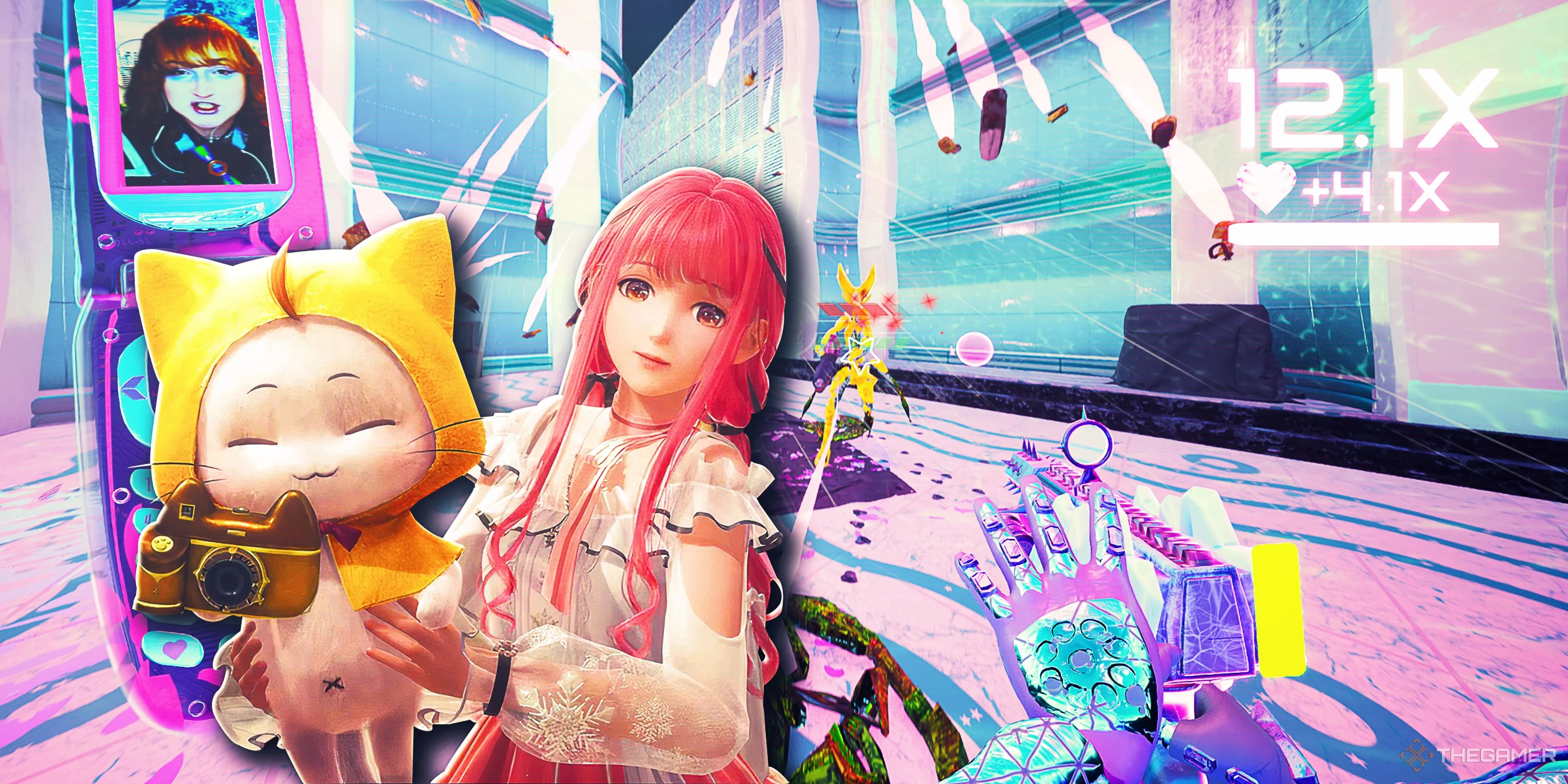
At its core, Incolatus is a Y2K-infused, arena-style movement shooter with a premise that swaps grimdark grit for radical love. The villain is a soulless mining conglomerate named Tigris Nix, whose goal is to literally drain the world of "The Love"—the natural, life-giving force that sustains the planet. Your mission? To become the antidote. As the game's director, Jane Fiona, cheerfully explains via a retro flip phone in the trailer, you are not just fighting drones; you are the revolution itself. Every bullet fired, every enemy shattered, releases a burst of Love back into the environment. You are, in her words, a "girly-pop eco-warrior." This isn't just about winning a match; it's about healing the world through hyperkinetic, pastel-colored violence.
Movement as a Weapon
The game's philosophy is simple: speed is power. The faster you zip, dash, and soar around the arenas, the more damage you deal and the more you heal the world. The movement system, dubbed "wave hopping," is a frenetic ballet that combines classic bunny-hopping with modern mechanics like slams, dashes, and double jumps. It looks less like running and gunning and more like painting the air with streaks of neon light. And your weapons evolve with your velocity. The quicker you are, the more your guns can... grow. Think extra barrels, ornate scopes, and glittering embellishments materializing mid-sprint. Defeating enemies drops collectible Love, which can be used to "supercharge" your arsenal, creating a deliciously satisfying feedback loop of speed, style, and destruction.
An Aesthetic That Demands Attention
Let's be real—Incolatus is aggressively, unapologetically girly. The screen becomes a mesmerizing blur of Barbie-core pink, electric green, and soothing aquamarine. But the commitment to the aesthetic runs deeper than the color palette. The game features a robust dress-up meta-game inspired by late-90s and early-2000s fashion, allowing players to customize their character's arms with different fabrics and colors. Furthermore, by donating the Love you collect to in-game fairies, you unlock even more cosmetic options for both your character and your weapons. It’s a system that marries progression with personal expression, ensuring your eco-warrior looks as fierce as she fights.
Reclaiming a Hostile Space
The sheer, overwhelming girliness of Incolatus feels like a radical act, especially within the first-person shooter genre. For years, the multiplayer FPS space has been notoriously hostile toward women, often driving them away with relentless harassment in voice chat. The experience of being told to "get back in the kitchen" while trying to play a game is, tragically, a common one. Incolatus doesn't just invite women into this space; it builds them a glittering, rhinestone-encrusted fortress right in the middle of it. It is transgressive by design, reclaiming hyper-feminine aesthetics not as a weakness, but as a source of immense power.
This is a crucial distinction from other "feminine" games. Where a title like Infinity Nikki appeals through coziness, cuteness, and light mechanics—possessing a broad, cross-gender appeal—Incolatus is deliberately in-your-face. It evokes the "bimbo aesthetics" and "I'm just a girl" slogans that surged in popularity a few years back, trends that often walked a line between ironic celebration and the excuse of anti-intellectualism. But here's the smart twist: Incolatus subverts that. It uses the same vibrant, consumerist-coded visual language to position the player as a radical, anti-capitalist revolutionary. You can love pink, fashion, and sparkles, and also be the deadly, world-saving force of change. It proves that "girly" doesn't have to mean passive, cozy, or simple.
| Girly Trait | Traditional Gaming Association | Incolatus' Interpretation |
|---|---|---|
| The Color Pink | Often denotes "for girls," casual, non-serious. | A weaponized visual identity, symbolizing power and revolution. |
| Fashion/Dress-Up | Side activity, often separate from core gameplay. | Integrated meta-game that directly ties into progression and power. |
| "Love" as a Motif | Sentimental, soft, non-confrontational. | The literal ammunition and objective; a tangible force to fight for. |
| Speed & Movement | Typically neutral or masculine-coded (twitch reflexes). | Framed as an elegant, fluid, and feminine expression of skill. |
The Bigger Picture
In the end, Incolatus: Don't Stop, Girlypop! is more than a game; it's a statement. It declares that femininity can be complex, powerful, and even violent. It asserts that you can care deeply about the planet and look absolutely fabulous while saving it from corporate greed. It’s a game that whispers—no, shouts—that girls don't have to settle for the roles traditionally offered to them, whether in gaming narratives or in the toxic cultures surrounding them. They can have it all: the speed, the style, the firepower, and the moral high ground, all dripping in rhinestones. In a genre that has often felt stagnant, Incolatus isn't just a fresh coat of paint; it's a complete architectural overhaul, building a dazzling new world where being a "girly-pop" is the ultimate power fantasy. And honestly? It's about time.